
Affiliate marketing is one of the most popular ways to earn money online by promoting products or services and earning a commission for successful referrals. It allows beginners, bloggers, content creators, and digital marketers to build an online business without creating their own products.
But how does affiliate marketing actually work? How do affiliate links track sales? Which affiliate marketing strategies help increase income?
In this affiliate marketing guide, you will learn what affiliate marketing is, how the affiliate business model works, the different types of affiliate marketing, how tracking technology works, and how to start affiliate marketing step by step.
Whether you want to build an affiliate marketing website, promote products through social media, or explore affiliate marketing without investment, this guide will help you understand the process.
What Is Affiliate Marketing?
Affiliate marketing is a performance-based marketing model in which an individual or business promotes another company’s products or services and earns a commission when a specified action occurs, such as a sale or qualified lead.
In simple terms, you recommend a product to your audience using a special affiliate link. When someone clicks that link and completes the required action, you may earn a commission according to the affiliate program’s terms.
For example, imagine you run a blog about digital marketing tools. You publish an article reviewing an SEO tool and include an affiliate link. If a reader clicks the link and purchases a subscription, you may receive a commission.
This is how affiliate marketing creates value for both businesses and publishers.
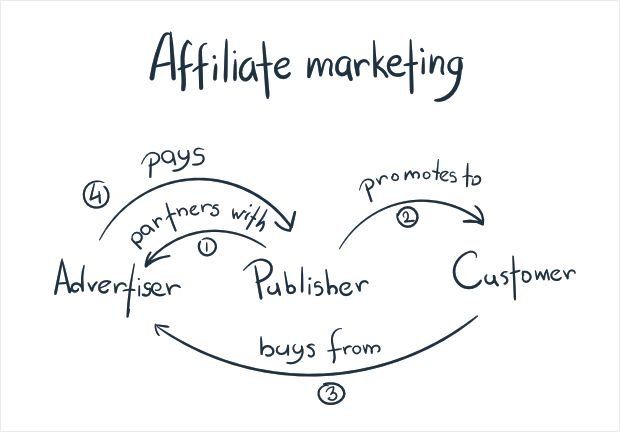
Key entities in affiliate marketing
- Affiliate: The person or business promoting a product.
- Merchant: The company selling the product or service.
- Advertiser: The business running or funding the promotion; this role often overlaps with the merchant.
- Publisher: The website owner, blogger, or content creator distributing promotional content.
- Consumer: The person who clicks the affiliate link and makes a purchase or completes another required action.
These participants work together to generate traffic, sales, leads, and affiliate revenue.
How Does Affiliate Marketing Work?
Affiliate marketing works through a simple process involving product promotion, affiliate link tracking, and commission payments.
How to Start Affiliate Marketing: A Practical Guide for Beginners
Step 1: Choose an affiliate program
Join an affiliate marketing program offered by a company or affiliate network. Examples include Amazon Associates and CJ Affiliate. ShareASale is another historically well-known network; check its current availability and any successor services before applying.
Write Product Reviews Without the Product in Hand | Post Affiliate Pro
Step 2: Create useful content
Publish product reviews, tutorials, comparison articles, case studies, blog posts, or email newsletters that help your audience make informed decisions.
Affiliate Marketing Guide for Beginners
Step 3: Share affiliate links
Use the unique affiliate links provided by your program. These links contain identifiers that help the affiliate platform associate referrals with your account.
Step 4: Generate a conversion
A visitor clicks your affiliate link and completes a qualifying purchase or another specified action. The program determines whether the action qualifies for a commission.
Affiliate Marketing with AI | MakeInfluencer.ai
Step 5: Track commissions and receive payment
The affiliate dashboard records eligible clicks, conversions, and commissions. After meeting the program’s validation and payment requirements, you receive your earnings.
For example, Amazon Associates uses tagged affiliate links to track referrals and determine eligible advertising fees. The exact qualifying conditions depend on the program. Help+1
What Is the Affiliate Marketing Business Model?
The affiliate marketing business model connects businesses with publishers who can help them reach potential customers. Instead of paying only for exposure, businesses can reward affiliates for measurable results.
The main participants are:
- Merchant or advertiser: Provides the product and affiliate offer.
- Affiliate or publisher: Promotes the offer through content and marketing channels.
- Affiliate network: Connects advertisers and publishers, where applicable, and helps manage offers, tracking, and reporting.
- Consumer: Discovers the offer and decides whether to purchase.
How do affiliate marketing commissions work?
Affiliate marketing commissions are the earnings an affiliate receives for qualifying actions. The payment structure depends on the affiliate program.
| Commission model | How it works |
|---|---|
| Pay per sale (PPS) | Earn a commission when a qualifying sale occurs. |
| Pay per lead (PPL) | Earn for a qualifying lead, such as a completed registration. |
| Pay per click (PPC) | Earn for eligible clicks when the program offers this model. |
| Recurring commission | Receive commissions for qualifying recurring payments, according to program rules. |
| High-ticket commission | Earn a potentially larger amount from qualifying sales of higher-priced products or services. |
Example: Suppose an affiliate promotes a digital marketing tool that pays ₹1,000 per qualifying sale. If 10 sales qualify, the gross commission is ₹10,000.
This is only an illustrative calculation, not a guaranteed income. Actual affiliate revenue depends on the commission structure, qualifying actions, cancellations, and other program conditions.
Understanding Affiliate Marketing Tracking
Affiliate marketing tracking is the process of recording and attributing visitors, clicks, leads, and sales to the appropriate affiliate. It helps businesses calculate commissions and allows publishers to evaluate their marketing performance.
Without reliable tracking, it becomes difficult to understand which content or traffic sources generate results.
What are affiliate tracking links?
Affiliate tracking links are special URLs containing an affiliate identifier or other tracking information.
For example, a standard product URL might look like this:
example.com/product
An illustrative affiliate URL could look like this:
example.com/product?ref=affiliate123
The second URL includes a referral identifier. Real affiliate links may use different formats, parameters, redirects, or tracking systems.
What are affiliate cookies and cookie duration?
Cookies are small pieces of data that websites can store in a visitor’s browser. Some affiliate programs use cookies to help recognise a referral and associate a later purchase with the original affiliate click.
Affiliate cookie duration refers to the period during which a cookie may remain eligible to support referral attribution, subject to the program’s rules and tracking technology.
For example, if a program has a 30-day attribution window, a qualifying purchase within that window may be credited to the affiliate. However, the actual result depends on the program’s terms, other referral interactions, and whether tracking remains available.
Cookie-based tracking is not the only method. Some programs also use server-side tracking, account-based attribution, or other technologies.
What is affiliate attribution?
Affiliate attribution determines which marketing source receives credit for a conversion.
For example, a customer might discover a product through a blog post, revisit it through an email newsletter, and purchase later. The affiliate program’s attribution rules determine how the conversion is credited.
Understanding affiliate attribution helps publishers make better decisions about content, traffic sources, and marketing investment.
Affiliate commission tracking and conversion tracking
Affiliate commission tracking focuses on the commissions associated with qualifying referrals. Conversion tracking measures important actions, such as purchases, registrations, or form submissions.
Useful metrics include:
- Clicks: How many times people click your affiliate links.
- Conversion rate: The percentage of measured visitors or clicks that complete the desired action, depending on the calculation used.
- Earnings per click (EPC): Average commission earnings per click.
- Total commissions: The commission value recorded by the program.
- Refund or reversal rate: The proportion of commissions later reversed or cancelled.
These metrics help you understand whether your affiliate marketing strategies are producing meaningful results.
Affiliate tracking software and tools
Affiliate tracking software can help businesses and publishers manage links, record conversions, analyse campaign performance, and generate reports.
Depending on your needs, useful tools include:
- Affiliate program dashboards for clicks, sales, and commission reports.
- Google Analytics for website traffic and on-site behaviour.
- Link management tools for organising and updating affiliate links.
- Affiliate network reporting tools for campaign-level performance.
- Conversion tracking tools for measuring relevant actions.
Choose tools that work with your affiliate program and respect its tracking policies. Do not assume that website analytics can independently verify every commission reported by an affiliate network.
What Are the Types of Affiliate Marketing?
There are three widely used types of affiliate marketing: unattached, related, and involved affiliate marketing. They differ in how closely the affiliate is connected to the product or niche.
1. Unattached affiliate marketing
In unattached affiliate marketing, the affiliate has little or no direct connection to the product niche and may promote offers through paid advertising or other traffic sources.
Example: Running an allowed advertising campaign for a product without having a specialist website or personal experience with it.
Which Software Review Site is Best for Small Businesses? A Complete Guide
2. Related affiliate marketing
Related affiliate marketing involves promoting products connected to your content niche or audience, even if you have not personally used every product.
Example: A digital marketing blogger recommending SEO tools relevant to readers.
Blog | AI Advertising Tips, Tools & Strategies | HighReach | HighReach
3. Involved affiliate marketing
Involved affiliate marketing is based on personal experience with a product or service. The affiliate shares informed recommendations, practical examples, or an honest review.
Example: A marketer demonstrating how they use an email marketing platform in a real campaign.
For beginners, related or involved affiliate marketing can be a useful starting point because relevant content and genuine experience can help build audience trust.
How to Start Affiliate Marketing for Beginners Step by Step
Starting an affiliate marketing business does not necessarily require a large budget. You can begin with a suitable niche, a relevant affiliate program, and a consistent content strategy.
Step 1: Choose an affiliate marketing niche
A niche is the specific topic or market you want to serve.
Potential niches include:
- Digital marketing tools
- Website development and WordPress
- Personal finance products
- Fitness and wellness products
- Technology and consumer electronics
- Online education and software
Choose a niche based on audience demand, your knowledge, the availability of suitable affiliate programs, and the potential to create useful content.
Step 2: Research affiliate marketing programs
Find affiliate programs that match your niche and target audience.
Examples include:
- Amazon Associates for eligible product referrals.
- CJ Affiliate for participating advertisers’ offers.
- Software companies with their own affiliate programs.
- Education platforms and other businesses offering affiliate partnerships.
Before joining, review the commission rate, attribution window, payment threshold, eligible traffic sources, and promotional restrictions.
Step 3: Select your affiliate marketing platform
Your platform determines how you reach potential customers.
Common options include:
- Affiliate marketing website: A blog or niche website built around useful search-focused content.
- YouTube: Product tutorials, comparisons, and demonstrations.
- Instagram: Short-form educational content and product recommendations.
- Email newsletter: Helpful recommendations sent to subscribers who have agreed to receive your emails.
- Social media communities: Useful discussions and relevant content, where affiliate promotion is permitted.
You do not need to use every platform. Start with one primary channel and expand when you understand what works.
Step 4: Build a content strategy
Create content around your audience’s search intent.
For example, a person searching for “best SEO tools for beginners” may be comparing products before buying. A person searching for “what is SEO” is more likely to want basic information.
A practical affiliate content strategy can include:
| Content type | Example topic | Search intent |
|---|---|---|
| Informational blog | What Is Affiliate Marketing? | Learn |
| Tutorial | How to Set Up an Affiliate Website | Learn and implement |
| Product review | SEO Tool Review for Beginners | Evaluate |
| Comparison article | SEO Tool A vs SEO Tool B | Compare |
| Buying guide | Best SEO Tools for Small Businesses | Choose a product |
This approach helps you address different stages of the customer journey instead of publishing only promotional content.
Step 5: Publish useful, trustworthy content
Write product reviews, comparison tables, tutorials, and case studies that help readers solve real problems.
Include relevant affiliate links where they add value. Explain the benefits, limitations, pricing considerations, and intended audience of the product.
Avoid unsupported claims and copied product descriptions. Original insights make your content more useful.
Step 6: Track performance and improve
Use affiliate dashboards and website analytics to measure traffic, link clicks, conversions, and commission earnings.
Identify which articles attract visitors and which pages generate qualifying sales. Improve underperforming content by making recommendations clearer, improving internal links, updating outdated information, and placing relevant calls to action.
Step 7: Scale your affiliate marketing business
Once you have evidence of what works, expand your content library, test new traffic sources, and explore additional relevant affiliate programs.
Scaling should be based on performance data rather than simply publishing more content or joining more programs.
Best Affiliate Marketing Strategies to Increase Income
A successful affiliate marketing business requires more than adding links to blog posts. Your strategies should attract the right audience, build trust, and help readers make informed decisions.
1. Use organic affiliate marketing
Organic affiliate marketing attracts visitors through channels such as search engines and unpaid social media content.
SEO is particularly useful for an affiliate marketing website because it can bring visitors who are actively researching products.
Practical actions include:
- Research keywords before creating articles.
- Match content to the search intent.
- Use descriptive titles and headings.
- Add relevant internal links.
- Improve page speed and mobile usability.
- Keep important product information updated.
Organic traffic can take time to grow, so it should not be treated as an immediate source of guaranteed income.
2. Use affiliate marketing with paid ads carefully
Paid advertising can help you reach potential customers through platforms such as Google Ads and Meta Ads.
However, affiliate marketing with paid ads requires careful planning. Advertising costs can exceed commissions, and some affiliate programs restrict direct linking, branded keywords, or particular advertising methods.
Check the rules of both the affiliate program and the advertising platform before launching a campaign. Start with a small, measurable test rather than assuming that more traffic means more profit.
3. Publish affiliate product reviews
Product reviews help readers understand whether a product suits their needs.
A useful review should cover:
- The product’s main features.
- Its advantages and disadvantages.
- Pricing or plan considerations.
- Your genuine experience, where applicable.
- Who should and should not use it.
- A clear next step for interested readers.
A review should provide value even if the reader decides not to purchase.
4. Create comparison tables
Affiliate marketing comparison tables make it easier to evaluate multiple products.
For example, a comparison of email marketing tools might include pricing, automation features, ease of use, integrations, and suitable business sizes.
Use accurate, current information and explain which product suits which type of user. Do not rank a product first merely because it offers a higher commission.
5. Build an email marketing strategy
An email newsletter lets you maintain a relationship with readers beyond a single website visit.
You can send tutorials, practical tips, product comparisons, and relevant recommendations to subscribers who have opted in. Include affiliate disclosures near recommendations and follow applicable privacy and email marketing requirements.
6. Optimise your calls to action
A call to action (CTA) tells readers what to do next.
Examples include:
- Check the Latest Price
- Explore the Features
- Compare Available Plans
- Try the Free Version
Place CTAs where they naturally follow the relevant information. Affiliate conversion rate optimisation (CRO) involves testing page layouts, link placement, content clarity, and other elements that may improve qualifying conversions.
7. Explore high-ticket and recurring affiliate commissions
High-ticket affiliate marketing focuses on products or services that can pay relatively large commissions per qualifying conversion. Recurring affiliate commissions may be available when customers continue paying for a subscription.
Both models can be attractive, but commission size alone does not determine success. Consider customer demand, product quality, conversion rates, retention, and program rules.
How to Earn Money Through Affiliate Marketing Without Investment
Affiliate marketing without investment is possible in the sense that you can start using free publishing platforms and organic traffic sources. However, building a sustainable business still requires time, effort, and useful content.
A beginner can start by:
- Choosing a niche they understand.
- Joining a suitable free-to-join affiliate program, if eligible.
- Publishing useful content on a free or existing platform.
- Sharing relevant links in permitted locations.
- Tracking performance and improving the content.
A self-hosted website, paid tools, or advertising may become useful later, but they are not always necessary at the beginning.
Remember that affiliate marketing is not guaranteed passive income. Articles and videos may continue generating referrals after publication, but they need maintenance, and income can change as search rankings, customer demand, and program terms change.
Common Affiliate Marketing Mistakes to Avoid
Beginners often focus too much on commission rates and too little on audience needs. Avoid these common mistakes:
- Promoting products unrelated to your audience.
- Choosing a product solely because it pays a high commission.
- Publishing thin or repetitive content.
- Ignoring affiliate link tracking and performance reports.
- Using paid ads without checking program restrictions.
- Hiding affiliate relationships from readers.
- Making unsupported product claims.
- Ignoring outdated links, prices, and product details.
- Expecting immediate results without consistent effort.
Trust is a long-term asset. Relevant recommendations and transparent communication can support a more sustainable affiliate marketing business.
Affiliate Disclosure: Why It Matters
An affiliate disclosure informs readers that you may earn a commission if they purchase through certain links.
For example:
Affiliate Disclosure: This article contains affiliate links. If you purchase through these links, I may earn a commission at no additional cost to you.
Place the disclosure where readers can easily see it, close to the relevant recommendation or link. Follow the rules of the affiliate program and the applicable advertising and consumer protection laws in your target market. Federal Trade Commission+1
Frequently Asked Questions About Affiliate Marketing
1. What is affiliate marketing for beginners?
Affiliate marketing for beginners is a way to learn online promotion by recommending other companies’ products and earning commissions for qualifying referrals. Beginners can start by choosing a niche, joining a suitable affiliate program, and creating helpful content.
2. How does affiliate marketing work?
An affiliate joins a program, receives tracking links, promotes relevant products, and earns commissions when qualifying actions occur. The affiliate program tracks referrals and applies its attribution and commission rules.
3. How do I start affiliate marketing step by step?
Choose a niche, research affiliate programs, select a publishing platform, create helpful content, add relevant affiliate links with proper disclosures, and monitor results using tracking reports.
4. Can I start affiliate marketing without investment?
Yes, you can begin with free content platforms and organic traffic. However, free methods still require time and consistent effort, and there is no guarantee of earnings.
5. What are the best affiliate marketing programs?
The best program depends on your niche, audience, product quality, commission structure, and eligibility. Options to research include Amazon Associates, CJ Affiliate, and relevant software companies’ direct affiliate programs.
6. What is affiliate cookie duration?
Affiliate cookie duration is the period during which cookie-based referral information may be used to attribute a qualifying conversion to an affiliate. The duration and attribution rules vary between programs.
7. What is affiliate conversion tracking?
Affiliate conversion tracking measures qualifying actions resulting from affiliate referrals. It helps publishers understand which content and traffic sources produce sales, leads, or other desired outcomes.
8. How can I increase affiliate marketing income?
Focus on relevant products, useful SEO content, product reviews, comparison articles, appropriate CTAs, and regular performance analysis. Improving traffic quality and conversion rates can help, but higher income is never guaranteed.
9. What is the difference between unattached, related, and involved affiliate marketing?
Unattached affiliate marketing has little connection between the affiliate and the product niche. Related affiliate marketing promotes products relevant to the affiliate’s audience, while involved affiliate marketing draws on personal experience with the products.
10. Is affiliate marketing a good business model?
Affiliate marketing can be a useful business model for publishers who can attract an audience and recommend relevant products. Success depends on content quality, traffic, audience trust, competition, and the affiliate program’s economics.
Conclusion
Affiliate marketing offers a way to monetise useful content by connecting customers with products and services that meet their needs. Understanding the affiliate business model, tracking technology, commission structures, and different types of affiliate marketing gives beginners a strong foundation.
To get started, choose a niche, research suitable affiliate programs, build a content strategy around search intent, and measure your results. Focus on helping your audience rather than simply adding more affiliate links.
With consistent effort, transparent recommendations, and data-driven improvements, you can develop your affiliate marketing skills and work towards building a sustainable online business.
Ready to start affiliate marketing? Choose your niche today, find a relevant affiliate program, and publish your first useful article.
SEO details for your blog
SEO title
What Is Affiliate Marketing and How Does It Work? (Beginner’s Guide)
Copy title
Suggested URL slug
yourwebsite.com/affiliate-marketing-for-beginners/
Copy slug
Meta description
Learn what affiliate marketing is, how it works, affiliate tracking, commission models, and practical strategies to start affiliate marketing for beginners.
Copy description
Primary keyword
affiliate marketing for beginners
Semantic SEO checklist
- Use the primary keyword naturally in the title, introduction, and one relevant heading.
- Cover related terms such as affiliate links, affiliate attribution, cookie duration, commission tracking, and conversion rate optimisation in their appropriate sections.
- Include relevant entities such as affiliates, merchants, publishers, consumers, affiliate networks, and tracking technology.
- Add internal links to related articles about SEO, content marketing, email marketing, and affiliate website creation.
- Add relevant external links to official affiliate program policies and disclosure guidance.
- Use original examples, accurate information, and a clear affiliate disclosure.
SEO note: Your keyword list is useful, but you do not need to force every keyword into the article. Your goal is to cover the topic comprehensively and satisfy search intent, not achieve a particular keyword density.